MASKLESS LITHOGRAPHY
Technology

Principle
In classical photolithography, a pattern is transferred onto a photoresist layer by exposing UV light through a hard photomask. Our Smart Print UV (SP-UV) maskless lithography system uses the **Digital Micromirror Device **(DMD) technology to eliminate the need for a mask. A DMD chip is made out of millions of micromirrors which can rotate and either reflect light or not. This allows the projection of a detailed image onto the substrate, and gives the user a straightforward way to move from the design directly to the patterned sample without the use of a standard mask. The lack of photomask means more flexibility, and faster overall fabrication time.
Resolution & exposure area
Our quick-release objective technology gives users access to four different writing resolutions to combine writing precision and speed: use the 1X to expose big surfaces with a 15 µm resolution, and switch to the 10X to reach a 1.5 µm resolution.
For designs larger than the single exposure area, or that require a high resolution and large exposure area, our in-house software Phaos cuts the design into multiple sub-images, and exposes them automatically as a raster scan.


Alignment
SP-UV integrates a secondary yellow LED source coupled with a feedback camera for focusing, inspection and alignment. This allows the user to align to previously made structures intuitively and precisely, either by projecting the second layer on top of the sample or by using alignment marks.
Substrates & photoresists
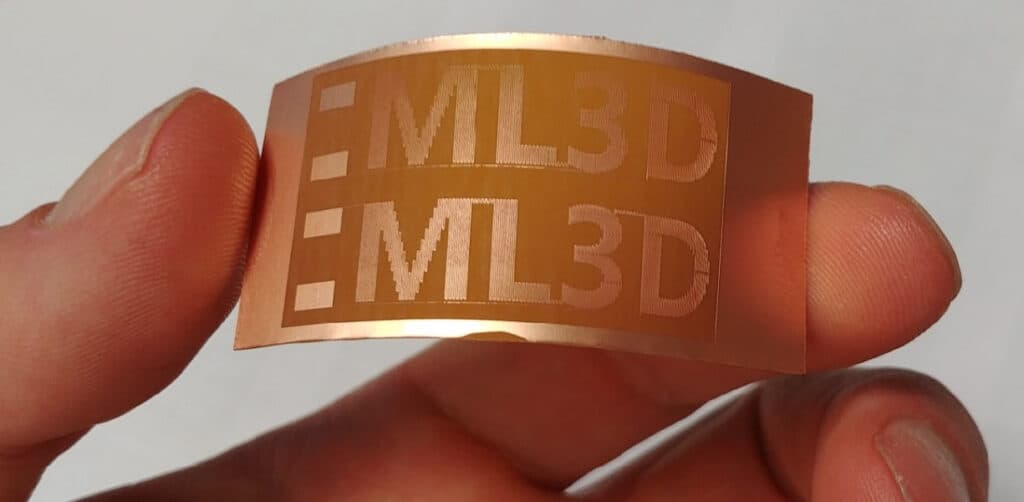
Work with a wide range of substrates: from silicon wafer to glass slides, and even more. Our objective range has been carefully selected with a large working distance (up to 3 cm) to make SP-UV compatible with non-standard substrates (non-flat, flexible, thick, 2D materials…). We can work with you to make custom sample holders for your specific needs.
SP-UV is equipped with a 385 nm LED source to be compatible with standard g-, h- and i-line photoresists (such as SU-8, AZ1500 and many more).